


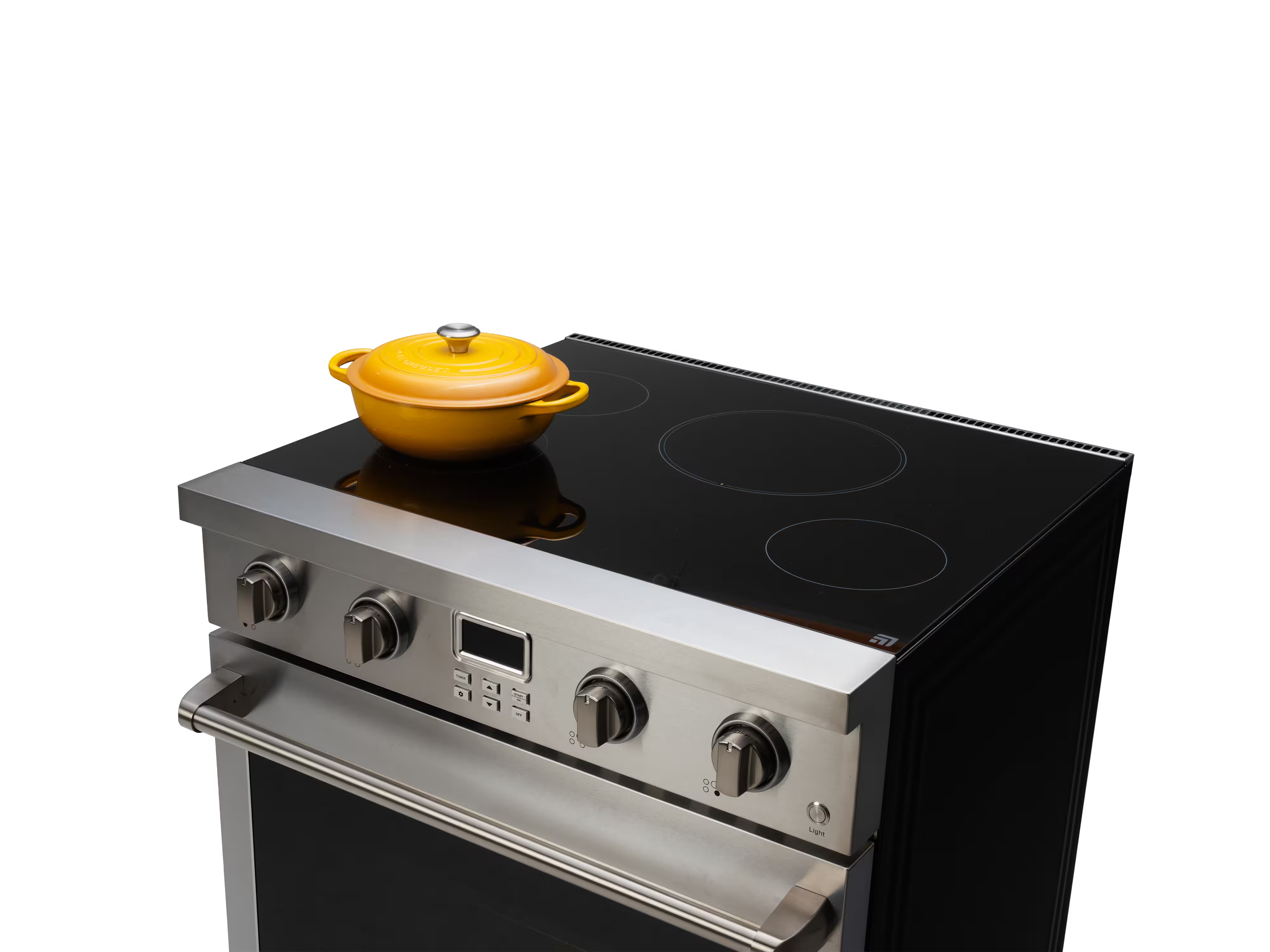
If you've considered switching to induction, you know the benefits: more precise temperature control, faster heating, better indoor air quality. You probably also discovered why most people don't make the switch. It's not the stove that's complicated, it's everything else.
The electrical requirements
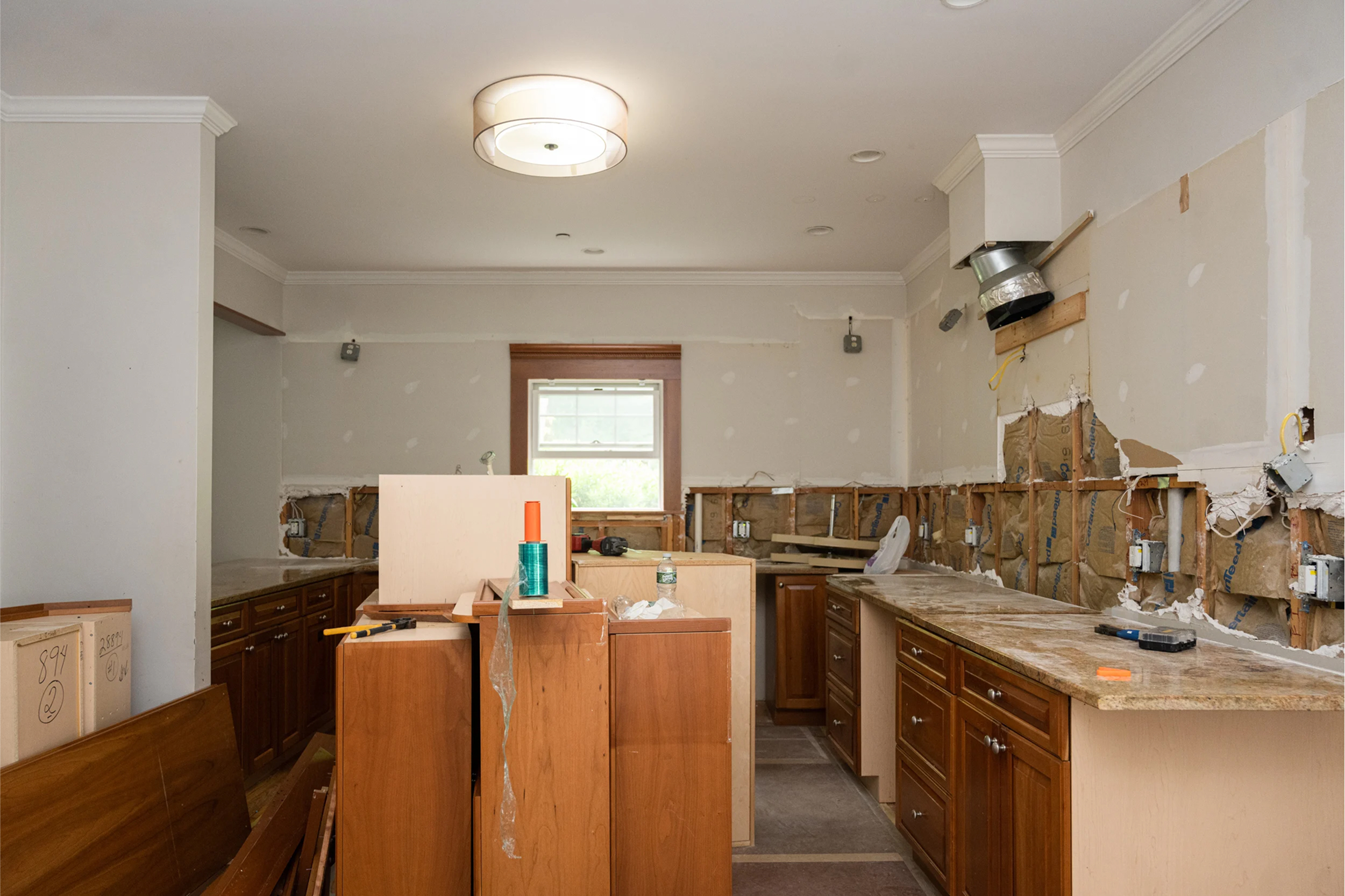
Most induction cooktops require 240V power at 40-50 amps. If you're replacing a gas stove, your kitchen likely doesn't have this connection. Creating one means running 6-gauge wire from your electrical panel to your kitchen, installing a 240V outlet (the same type used for your dryer), and potentially upgrading your electrical panel if you don't have available capacity. As if that wasn’t enough, most cities require permits for this work.

The timeline
A typical installation takes six weeks from decision to dinner. First, you'll likely spend a week or two getting quotes from licensed electricians. Then you'll wait another week or more for a good electrician's schedule to open up. The actual electrical work and inspection takes another week or two, followed by stove delivery and installation.
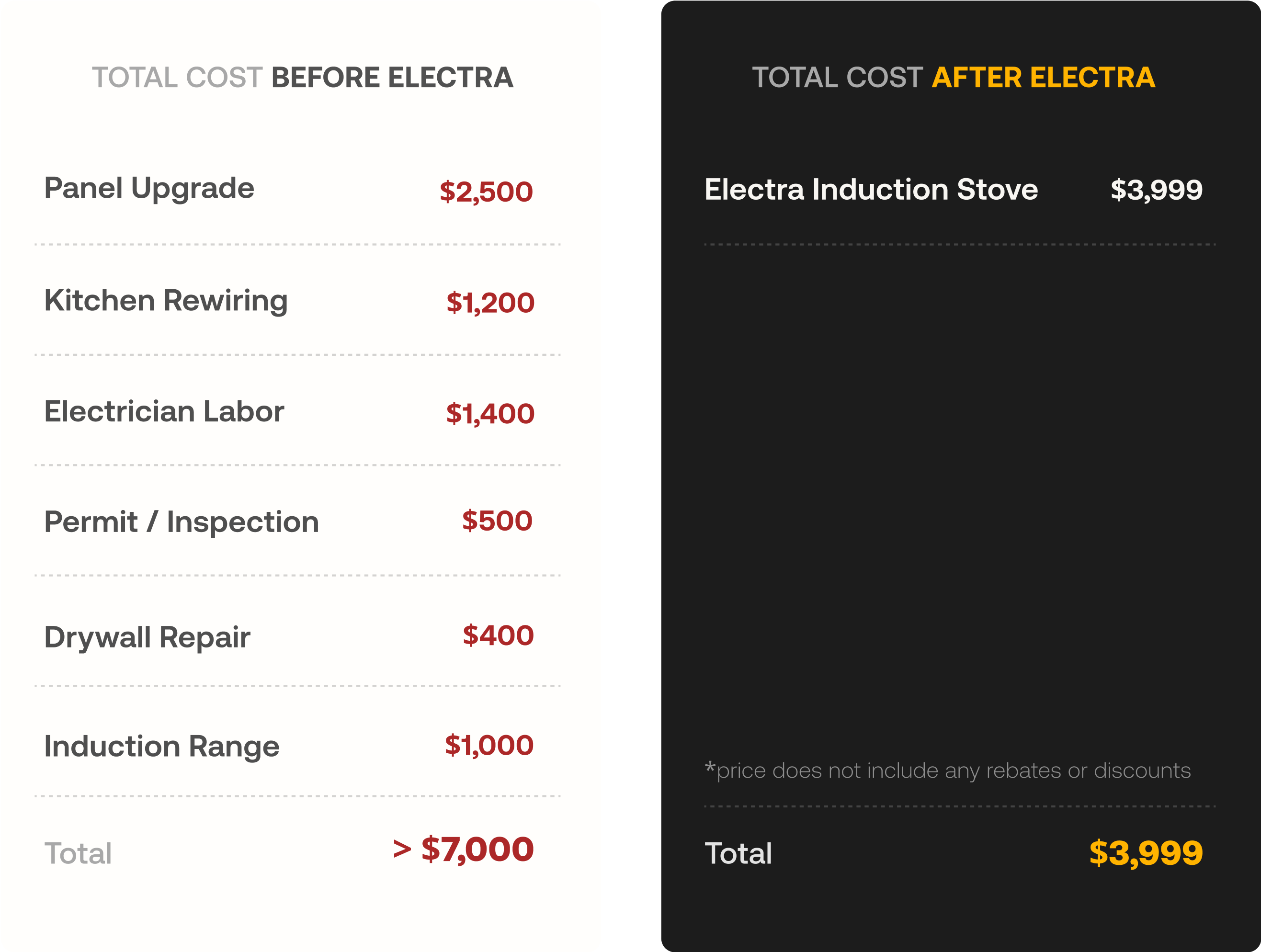
In many buildings, especially older ones, the cost of electrical work exceeds the cost of the appliance itself.
For renters or condo owners, add time for landlord or HOA approval…if you can get it at all. Most multifamily buildings don’t have enough panel capacity for their residents to add a 240V outlet to their kitchen.
You get the idea—it's a headache.

How a battery changes the equation
Traditional induction stoves pull massive amounts of power when multiple burners are on high. That's why they need heavy duty electrical connections.
Electra's battery system works differently. It continuously charges from a standard 120V outlet (pulling a maximum of 1,800 watts) and stores 5kWh of energy (enough to cook several meals). The upshot? It can deliver full power to all your burners at once when you need it. Between meals and overnight, it quietly recharges.
What changes when installation is simple
With Electra, you use the outlet already behind the stove. No electrical work, no permits, and installation takes less than an hour. This isn't about cutting corners, it's about recognizing that the barrier to better cooking shouldn't be your home's electrical system.
When we remove the renovation requirement, induction becomes accessible to the 35% of Americans who rent their homes, condo owners with strict HOA rules, anyone in older buildings with limited electrical capacity, and people who simply want to upgrade their stove, not their entire kitchen.
The features that matter
Once you're cooking with induction, the benefits are immediate:
- Your pans heat much faster
- Temperature changes are near-instant (no waiting for coils to cool)
- The cooktop stays cool (except directly under the pan)
- Cleaner air in your kitchen
But none of that matters if people can't actually make the switch.
By eliminating the infrastructure barrier, we're not just making induction easier—we're making it possible for millions of households that were previously excluded from this option.
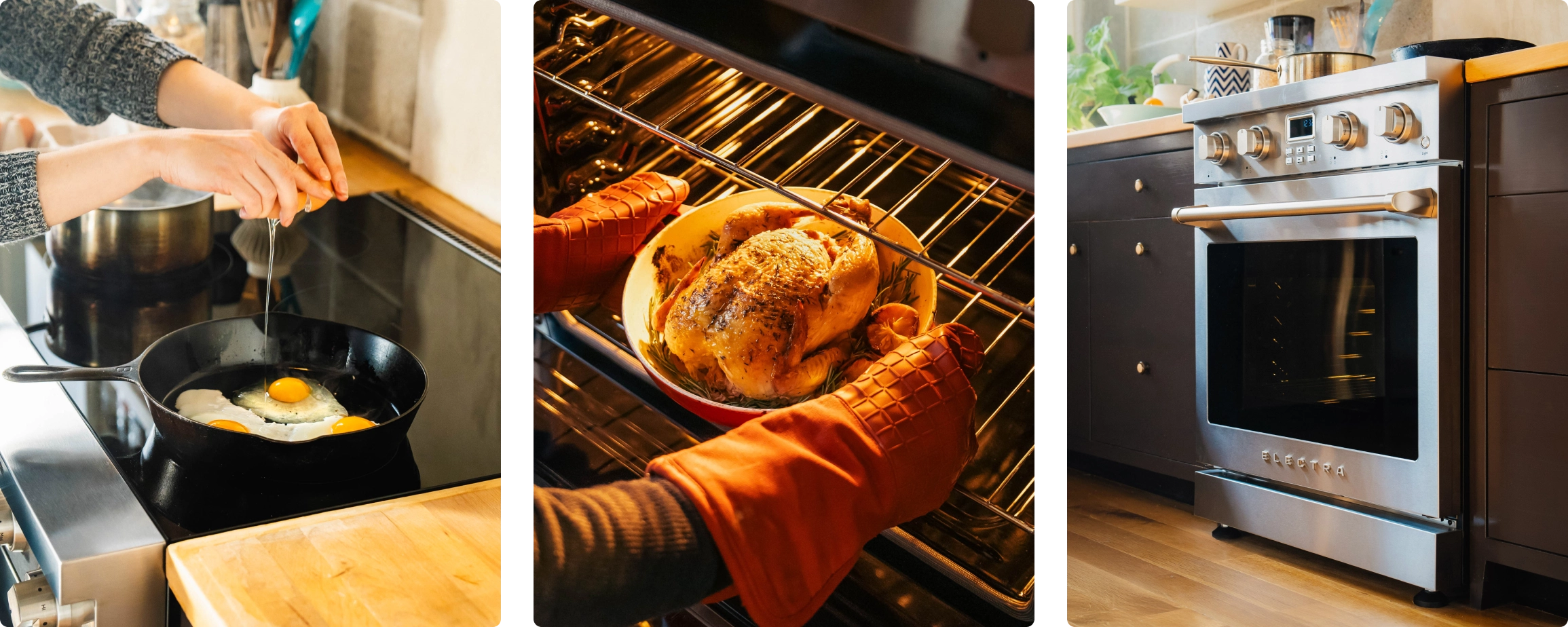
A different kind of upgrade
We designed Electra for the real world, where not everyone owns their home, not every building has modern electrical systems, and not everyone wants to manage a construction project.
The future of cooking should be accessible to as many people as possible.
If you've been waiting for induction to make sense for your situation, we built Electra for you.


